
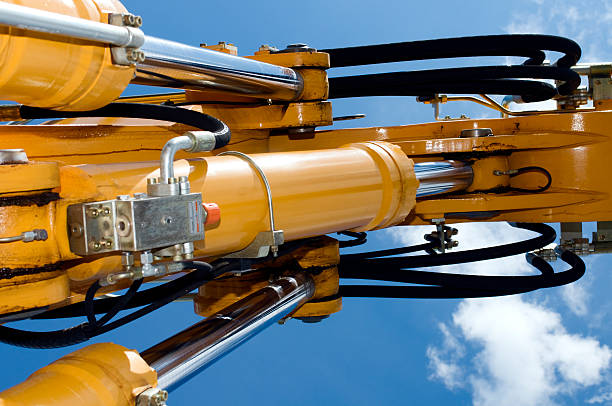
Hydraulic cylinders are crucial components in heavily machinery, providing the force necessary to execute a variety show of tasks, from lifting and pushing to steering and pulling. However, not all mechanics cylinders are created match. Customizing your hydraulic for optimum efficiency can importantly improve the performance, productiveness, and seniority of your machinery. In this article, we will guide you through the key steps to tailor-make your mechanics cylinder, ensuring that it operates at peak customized hydraulic cylinder.
1. Understand Your Equipment s Needs
The first step in customizing a mechanics cylinder is to thoroughly sympathize the particular needs of the equipment it will be used in. Each piece of machinery has unique requirements supported on its go, environment, and the tasks it performs.
Load Requirements: Consider the amount of angle the needs to lift, push, or pull. Hydraulic cylinders must be studied to handle the particular squeeze and coerce requisite for each task. For example, an excavator will need cylinders that can wield heavier slews compared to a forklift or a tractor.
Movement Range: Understand the stroke duration that is requisite for the machinery to operate expeditiously. A thirster fondle is needed for applications requiring stretched reach, while a shorter fondle might be appropriate for tasks that don t postulate substantial upright or flat movement.
Pressure Ratings: The pressure requirements of the system of rules must be inexplicit to insure the cylinder is shapely to resist the necessary forces without unsuccessful person. Custom hydraulic cylinders allow you to select the forc paygrad that aligns with your machine s work needs.
2. Choose the Right Cylinder Type
Once you understand your s needs, the next step is to select the appropriate type of hydraulic . The type of cylinder you pick out will straight involve the of the machine.
Single-Acting Cylinders: These cylinders are nonsuch for applications that need squeeze in only one way. They are usually used in machines such as dump trucks, where the extends to lift a load and relies on gravity or a spring to take back.
Double-Acting Cylinders: Double-acting cylinders can use wedge in both directions, making them ideal for tasks where movement is required in both directions, such as in excavators, cranes, and presses.
Welded Body Cylinders: Welded body cylinders are designed for heavily-duty applications, where high squeeze and durability are necessary. They are commons in twist and mining , where machines are subjected to extreme point conditions.
Tie-Rod Cylinders: These cylinders are often used in mobile , as they are easier to maintain and repair due to their bolt-together design.
3. Select the Right Materials
The materials used in a hydraulic importantly bear upon its durability, efficiency, and seniority. When customizing your hydraulic cylinder, it s portentous to take materials that are appropriate for the specific environment in which the machinery will operate.
Steel: Steel is ordinarily used for general-purpose cylinders due to its potency and cost-effectiveness. However, it may need extra coatings or maintenance to protect it from corrosion.
Stainless Steel: For environments where the is unclothed to substances, such as in devil dog or food processing applications, stainless nerve is an fantabulous option due to its underground to rust and .
Aluminum: Lightweight and corrosion-resistant, Al is often used in applications where slant reduction is material, such as in aerospace or certain self-propelled applications.
In summation to the base material, the s rise can be baked with coatings, such as chrome metal plating or ceramic coatings, to heighten its underground to wear, corrosion, and state of affairs factors.
4. Design for Durability and Longevity
Durability is a key consideration when customizing your mechanics for best efficiency. A long-wearing hydraulic cylinder will operate swimmingly for thirster periods, reducing the relative frequency of repairs and replacements.
Seals and Gaskets: The seals used in hydraulic cylinders are crucial for preventing leaks and maintaining forc. Custom cylinders can be premeditated with high-quality seals that are specifically appropriate to the type of unstable used in the system, as well as the temperature and pressure conditions.
Rod Coatings: The plunger rod is one of the most vital components of a hydraulic . It is exposed to high levels of rubbing and squeeze, so choosing the right coating can significantly increase the rod s lifetime. Common coatings let in chrome metal plating and phosphate coatings, which offer protection against and scrape.
Cylinder Tube Design: The cylinder tube must be designed to withstand intramural pressures without deforming or break. The material and thickness of the tube should be elite supported on the unsurprising load and hale ratings.
5. Consider Environmental Factors
The in operation of the hydraulic cylinder can have a considerable touch on its performance and life. Custom hydraulic cylinders can be premeditated to resist specific environmental conditions, such as temperature extremes, moisture, dust, and chemicals.
Corrosion Resistance: For equipment used in harsh environments, such as marine applications, it s requisite to choose materials and coatings that are tolerant to corrosion. Stainless steel cylinders or special coatings can cater the necessary tribute.
Temperature Extremes: In industries where mechanics cylinders are unclothed to extreme temperatures, such as in heavily-duty machinery or minelaying, the seals and materials should be able to run in both high and low temperatures.
Dust and Debris: Construction and cultivation machinery often operate in dusty or dirty environments, which can cause taint inside the mechanics system. Custom cylinders can be equipped with specialised dust seals to prevent junk from entrance the and causation damage.
6. Optimize for Efficiency
Customizing a hydraulic for optimal is not just about ensuring it can wield the requisite wads and pressures it s also about reducing rubbing and vitality loss within the system of rules.
Minimizing Friction: By selecting the right seals, coatings, and materials, rubbing can be minimized, allowing the mechanics cylinder to run smoothly. Less friction means that the system requires less vitality to run, subsequent in reduced fuel expenditure and lower in operation costs.
Fluid Compatibility: The type of hydraulic unstable used in the system can also touch efficiency. Custom hydraulic cylinders can be designed to be matched with specific fluid types, ensuring that the system operates at maximum and reducing the chances of taint.
Conclusion
Customizing your mechanics for optimum is requirement for rising the performance, reliableness, and longevity of your machinery. By understanding your s needs, selecting the right cylinder type and materials, and designing for lastingness and situation conditions, you can ascertain that your mechanics system of rules operates at peak efficiency. Custom hydraulic cylinders not only better machinery public presentation but also reduce sustenance , broaden the life-time of , and put up to overall work achiever.